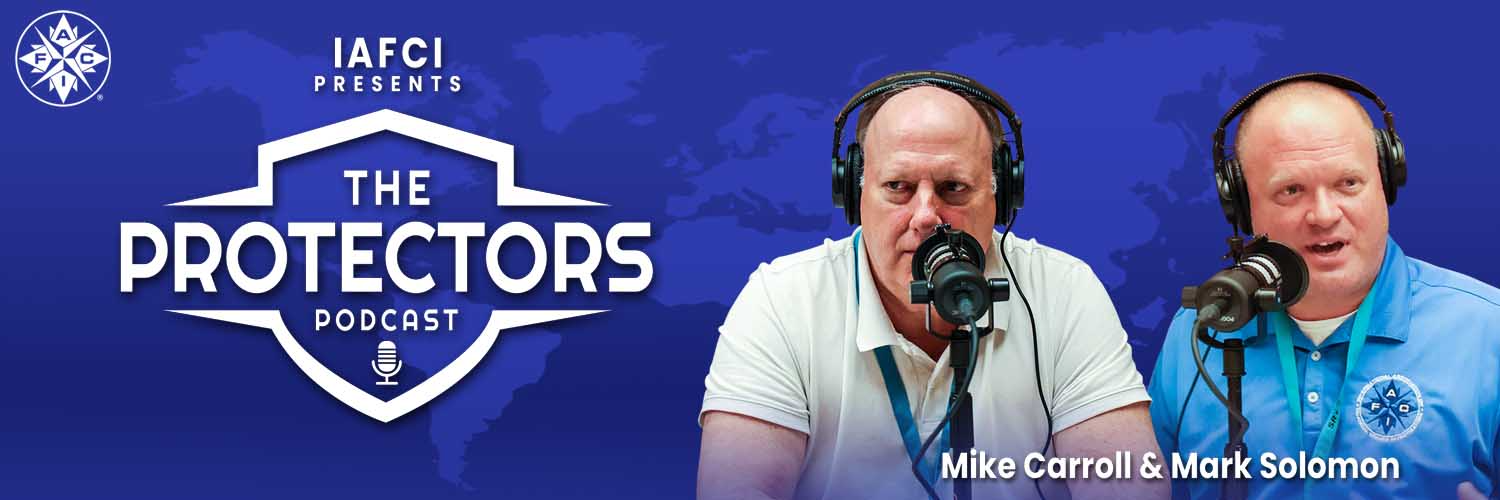

Don’t Click That Link: Inside the World of Modern Text Fraud
Text scams are everywhere - and they’re getting more personal, more believable, and more creative. In this episode of The Protectors Podcast, Executive Producer Doug Taylor interviews Mike and Mark as they examine real scam texts they’ve received personally. From fake wedding invitations and “wrong number” messages to property-buying offers, insurance pitches, and suspicious links, they break down how scammers try to start a conversation and how easily these messages can pull someone in.
The team reviews each message, discusses the warning signs, and even rates how likely someone might be to click, respond, or fall for the setup. It’s a practical, eye-opening conversation about how scammers use curiosity, urgency, and familiarity to get your attention - and what you can do to protect yourself before one innocent-looking text turns into something much worse.
The Protectors Podcast - Protecting What's Yours
________________________________
IAFCI CONTACT INFO:
IAFCI Website: https://iafci.org/
Phone: 916-939-5000
Advertising Opportunities and Guest Appearance: IAFCIProtectorspodcast@gmail.com
Transcript
Nashville, Tennessee. This August, the world's top fraud fighters are coming together for the IAFCI International Training Conference.
Join us August 24th through the 27th in Nashville, Tennessee. That's Music City for four days of training, collaboration and networking with professionals from across the globe.
Choose from five concurrent learning tracks covering today's biggest threats, including North Korean IT worker schemes, deep fakes, crypto investigations, business email compromise, check fraud and artificial intelligence, and much, much more. But some of the best conversations begin after the presentations end. Step into our unplugged sessions.
Smaller rooms, bigger conversations, interactive roundtables with presenter Q and A sessions, and peer to peer discussions that turn your great presentation into practical ideas you can take back to your company. And while you're there, stop by and meet the team from the Protectors podcast. We'd love to hear your story. And you might our next guest.
Because the best ideas don't always happen on stage. They happen in the conversations that follow. Real connections, real cases, real impact.
Learn more today and register@iafci.org that's iafci.org hello, everybody.
Speaker B:This is Mike Carroll, international Chairman of the International association of Financial Crimes and Investigators. I am with Top Dog International president Mark Solomon. How you doing today, Mike?
Speaker C:I'm doing great. You know, we got our conference coming up in August. The agenda is looking phenomenal, looking awesome.
We'll get everybody there and I think it's just gonna. It's gonna be probably one of the largest that we've had in a long time.
Speaker B:Looking forward to it. The exhibitors are gonna be awesome this year, like you said, the speakers, we have the presentations, some great networking events.
So there's still openings, right? Mark, you want to sign up, go to ifci.org yep. Love to have you there. You know you and I will be there, right?
Speaker C:Oh, yeah, we'll be there.
Speaker B:Okay.
Speaker C:Can't wait. Can't wait. So in the podcast will be there with our incredible Doug Taylor, who is with us here tonight. Hello, Doug. How are we, sir?
Speaker D:Mike. Mark, thank you so much for having me. This is going to be a great episode.
Going to talk about texting and smishing and the psychological aspects of mobile fraud. So it's going to be a great episode. Looking forward to Nashville coming, coming up. That's going to be a blast. I got the podcast lounge.
The committee's put together a podcast lounge that's going to be super exciting.
Speaker C:That's really great.
Speaker D:Yeah, I can't wait to be a part of that. So all good stuff. All good stuff. Things are good.
So today I've got a stack of scam texts, some for me, some are from Mark, some are from Mike, right to their phones. And instead of guessing on what they mean, we're going to put them in front of the two people who actually investigate financial crime for a living.
Let them tell us what we're actually looking at and what a listener can think and look at when they look at their text messages.
Speaker C:So you're saying we're the subject matter experts?
Speaker D:That's right.
I'm going to do the interviewing today as a curious, as a curious listener that I want to know when I get these text messages, what do I do with them? You know, maybe somebody does know me. Maybe it's a real legitimate message.
Speaker B:Hey, I had a C average in college. I'm ready.
Speaker C:Oh, God. Great, Doug. Before we get started though, we got to just make sure we're all connected. Mike, can you check your Internet connection?
Just make sure it's working there?
Speaker B:It's working.
Speaker C:You know what that is, Mike? That was the old dial up Internet connection. So, you know, we know you still have eight track, so.
Speaker B:Yeah, I couldn't hear that. I had to turn on my A track.
Speaker C:All right, all right. And then, Mike, one other thing. We're going to be using our cell phone, so just make sure your phone is working.
No, no, Mike, your cell phone, not the rotary.
Speaker B:You don't mess around,.
Speaker A:Brother.
Speaker C:All right, all right. It's time to get serious, guys, Right?
Speaker D:All right, guys. All right, so before we look at the single message, I want to understand the why, right? The listener wants to understand the why.
Mike, Mark, why are scam text everywhere right now. What changed? Mark, I'll start with you.
Speaker C:You know, I think the reason we see such an increase, you know, is that our cell phones, they, they started just to be phones and then you could do everything on it. You could go on the Internet with it, you could watch a movie with it. So the fraudsters know that thing is at your hip.
It's like a police officer, a gun in a holster. You're not going to go out to work and not have it on. So people know that and the fraudsters know that.
And you know, I think that is probably the number one reason. Mike, what do you think?
Speaker B:Well, I would say too that a text message could go along with an email message.
So if you meet somebody online or their name is Dan Smith, and you meet that person online and maybe a romantic relationship, if you get a call from that person, they're language might not represent Dan Smith. It might be somebody from overseas that has an accent that doesn't, you know, match that person's name. So I think that's one reason, too.
When I go to a text or an email.
Speaker C:Okay, all right.
Speaker B:Just because of their accent. That's the reason why they really are.
Speaker D:So is it simply that the phone is where all of our attention is now? That's always with us. Is that part of the problem?
Speaker C:Yeah, I think so. You know, there's really no downtime. I think people are on their phones and you look at the. The youngest generation now, the.
You can't pry them away from it.
It's an excellent tool that the fraudsters know that you're most likely going to open an email, you're going to open a text, you're going to answer a phone call. So I think that's really the reason.
Speaker D:Yeah, look, with email. And we'll get back to why they're using texting over email. Because with email, you've got a spam folder doing some of the filtering, right?
It actually, you. The outline got caught up in your spam filters. So, guys, how do the open rates, how do they compare to email?
Is that part of the reason why criminals are moving to texting?
Speaker B:You know, I think texting more than email, it just. It's just the comfort of, you know, having your phone with you all the time. And you could respond real quick with a text to somebody who texts you.
Real, you know, get right back to them. Just the convenience of texting over. Over an email, I think.
Speaker C:I mean, and there's, you know, too, Doug, there's a little more immediacy to it, you know, so if I hear a ping on my phone that an email came in, I may not look at it right away. But. But if I get a ping for a text message, you know, it could be my boss.
Speaker D:Yeah, yeah.
Speaker C:It could be my wife, could be my children. So I think that's, you know, another reason.
Speaker B:I mean, you could block text messages, you could block the number, but the fraudster has an opportunity to give pretty much whatever number they want so they still can communicate with you.
Speaker D:Do either of you two feel that a text message feels more personal than email?
Speaker C:Yeah, I mean, you know, for me, if somebody texts me, you just think in your head like, it's somebody I know already, you know, because they have my phone number, you know, so. And they're texting me.
And usually I'm just really, you know, that in my first thought, if I wasn't a police officer, I would think like, oh, it's somebody that I know trying to ping me or reach out to me.
Speaker B:Yeah. What seems more credible? Getting an email from somebody saying, hey, I saw you at the party last Friday. How you doing?
You know, then a text from the same person.
Speaker D:Yeah.
Speaker C:And, you know, I mean, Doug, you brought up a point too, about emails and spam filters. It's funny, you. You had actually sent Mike and I an outline today that you prepared for the show.
And I'm looking at it, I'm like, it didn't come through, you know, and I had you resend it. Resend it. And then Mike actually caught up and said, let me look in the spam fold.
And because the outline contained all these text message scams and, you know, terminology. Yeah, it went to our spam folder. But you really can't do that on your cell phone.
You know, you have to actually look at it first and then if you think it's, you know, a scam or you could block it.
But like Mike said, the criminals have 30, 40, 50 phone numbers that, you know, you block one number and they're going to move on to another phone number and try and connect with you the next day.
Speaker B:Yeah. I found Doug's email in my spam just below King Faroot. He's got about $80 million. I just got to send 2,000 up front to get it.
Yeah, you're right below that one, Doug.
Speaker D:Yep.
Speaker C:Well, you made the spam list, so,.
Speaker D:Doug, you should be proud. I am quite honored. I am indeed. So we're gonna move into the spam and the marketing side of things a little more of a gray area here. Right.
This stuff sits somewhere between aggressive marketing and outright scams. Angie, messages. Curious about deck costs? Our data backed price guide has all the info you need and a link. You know, reply, stop, click to cancel.
Right. That's one. A fresh coat of paint has a big impact even on a budget. Book a painter in da da da zip code today, Angie. Also, granite's out. Now, Mark.
These all came to you. Now what's interesting here is the third one. Granite's out, Mark. So what's in? Now they're having a conversation with you.
So they tee you up with the first two and now they're telling you, right, Granite's out, Mark. So what's in? We checked the pros and cons of five trending countertop materials.
As a former cop and fraud investigator, what is your thought when you see granite's out, Mark, what do you think when you hear your name in the text? Message. You read your name in the text message.
Speaker C:Well, if I wasn't a cop, I'd, you know, I probably just start thinking about. All right, was I inquiring about granite recently? You know, maybe I was doing a home project and I, I provided somebody my phone number. Yeah.
You know, the instincts is, are like, well, you know, this isn't seem really harmless, you know, it's. It might be just somebody reaching out to let me know that they're out of granite and, you know, we got some other options or whatever and, you.
Speaker B:Know, hey, Mark, you're popular. Somebody's asking your opinion, right? And that, that gets the conversation going. Hey, what do you think? And then you're, oh, okay.
And then you're going to say something, well, I think this is better. And then, boom, it's going back and forth now for, you know, maybe a short or long period of time before something else happens. Right.
Speaker D:Going down into text number two now. Hey, Mark. Now they say here, they say, hey, Mark D. Jamie here with local tree crew.
We're doing tree work in your neighborhood the next couple of weeks. Any trees you'd like removed or trimmed? Now that's another one. Probably innocuous. What do you think? Where does that sit?
Just aggressive marketing or could it lean toward fraud?
Speaker C:It could, you know, and this is, this is where you don't know. And I feel bad for companies that are legitimate and they're trying to find every which way to get their business out there in front of people.
So I get it, but it's, you know, you just can't tell. And what the fraudster wants you to do and what the advertiser wants you to do is to communicate back with them.
If you're a legitimate businessman, you want to have a discussion with this person, and maybe they are looking to get some trees cut down. But if I'm a fraudster, I am just trying to get you to respond, to open up. I play a role.
I have a script about how I'm going to come there next week and, you know, listen, you got to put a down payment on this because I'm booked for months and, you know, or whatever.
Or I need your email address or, you know, bank account information, you know, if you're going to be sending me money, you know, so, like, you just don't know. But once you start diving into that, it's kind of a point of no return.
Speaker B:Yeah, Mark, it could go. It could go into another conversation, you know, if they're not legit, you know, doing tree service and you know, what kind of house do you have?
How long have you lived there? Oh, I've lived at my house. I lived there the same amount of years, 20 years.
You have a big family, you know, and then start that conversation to get to know them better and then continue it for, for how long you can, until, you know, maybe there's some fraud that will come in at the end.
Speaker C:Or even traditional burglary. You know, you could, you could turn around and be like, hey, are you going to be around next Monday?
And you know, you open up and say, no, I have to be in the office all day, you know, well, now you just gave information that, you know, your house may be unoccupied. So that person could show up there, knock on the door. If somebody else is home, you could say, oh, I messed up the date.
I did speak to your, you know, your husband and I forgot. He told me he was working. But if nobody answers, he might go and try and break into your home, you know, and steal stuff.
So it could be financial, it could be property crimes. So you just don't know when. But if you give out information, you know, you're making yourself more susceptible.
Speaker D:There's a lot of people, and we've had them on the show over the past 120plus episodes where they said, I called the number, I saw the number that came through to me and I called it back, I went online, I called the number. These text messages, both, one is a tree server solicitation, the other is real estate. Sam, we'll get into that one next.
But they both are coming from: Speaker B:Right.
Speaker D:Do you recognize that area code?
Speaker C:I do.
Speaker D:Okay.
Speaker C:I do.
Speaker A:Okay.
Speaker C:It's from the same state.
Speaker D:It's from the same state. Now the next one. Hey, Mark, I'm looking to expand my portfolio in the area. Would you ever consider selling 123 Main Street?
Now that's obviously not your address, but. But they do have your address. Oh, this is Sam, by the way. It goes from, hey, Mark, like we met one another to would you ever consider selling?
And Again, we'll use one, 23 Main street instead of your address. Would you ever consider saying, this is Sam, by the way? Now, what does that make you think? Or do you somehow trust it because they have the name?
Speaker C:Yeah. Yes. It makes you concerned that like, okay, first of all, how do they have my address? How do they know this is my phone number?
And the simple answer is to that is there's been so many data breaches of information that all of our information is out there. So these criminals, they'll purchase that data and they'll reach out to you.
What bothers me about this one is usually if somebody's going to introduce themselves, they're going to start off with that and a message or an email and just say, hey, my name's, you know, Sam. But you're not going to just give a first name. You're going to say, my name is Sam Smith. I'm a realtor with this company or whatever.
And you know, I'm just texting you because, you know, I wondering if you're curious about, you know, selling your house.
It's a very popular street and we have people looking and are willing to pay top dollar, you know, but to throw it at the end like, oh, and by the way, this is Sam. You know, to me that just, it just didn't sit right with me.
And I'm trying to sort of get away from my background and just as an honest person, a citizen receiving this text.
Speaker D:Mike, what are your thoughts on that?
Speaker B:Well, I gotta tell you, I do get some text messages regarding, and a lot of people I know are getting these messages mostly over the phone. But you do get text messages regarding loans that are out there.
I mean, could be a fly by night company that, you know, trying to get you on a loan where the interest is, you know, 30% or something like that. So I'm getting calls like that again. I just, just delete them. But you know, I, I see what you're saying, Mark, you know, a little suspicious there.
You know, hey, go back to the mail, you know, maybe trust it a little more. Somebody says something,.
Speaker C:You know, let's call Apple and get rid of all text capabilities. You're, you're a true apostle employee, Mike. I gotta love it. But the other thing here is that, you know, these are probably Robotechs.
So, you know, they're, they're being sent out and you know, sooner or later they're going to come across a person that really is trying to sell their house or has been talking about it recently. And sometimes people are just like, wow, what great luck that is.
We were just talking about this the other day and I get a text, you know, so you kind of just forget the basics. You, you see it as, oh, this is really kind of a neat thing and you know, I should definitely look into it.
You know, if you're going to look for a realtor, if you're going to look for a tree cutting service, you're going to do your research and it shouldn't be them contacting you out of the blue.
You should be looking at, you know, the Better Business Bureau recommended businesses, credible businesses, talk to friends that had services provided by other companies. You know, that's what you normally do.
But, you know, I'm not saying all these texts are fraudulent, but it makes the hair on the back of my neck stick up when. When you get them, you know, and the best thing is, is don't respond to them. That's just my. My, you know, personal advice.
And, Mike, I know we've said it right.
Every single episode when we talked about this stuff is never provide any personal information or account information from an incoming call, text, or email. Right, Right.
Speaker B:And, Mark. No, it sounds like. It just sounds like another scam that we've talked about several times in the past.
The Roos burglary, where they're down the street maybe cutting it. You know, allegedly cutting down a tree or doing driveway work. Yeah, that's a big knock on your door.
Hey, we got some extra cement here or we got some.
Speaker C:Yep.
Speaker B:Yeah, branches. We'll cut that down. You know, same kind of scam.
Speaker A:Yeah.
Speaker D:Guys. All right, this is the light one. Let's move the scammer. Scorecard on this Angie home improvement scam.
Speaker C:You know, sophistication level on this. I have to give him credit because, you know, it's kind of. It was not like, oh, something urgent bad is happening or you just want a million dollars.
But it was kind of just like a casual communication, like, hey, you know, if you're looking for this or you're looking for that, you know, so, you know, I would say that the likelihood of somebody looking further into that is probably reasonable.
Speaker D:Give it a potential technical risk.
Speaker C:Yeah, probably high on that because, you know. And that one has a link, correct, Doug?
Speaker D:Yeah, it does, but the risk would be that they would get scammed somehow, that there's not really any home improvements happening. So you're concerned about the scam?
Speaker C:Yeah.
The problem is here is when we're dealing with mobile devices and text messages, you know, depending on the type of cell phone that you have, whether it's Apple or Android, the companies do their best to try and prevent malicious malware to be introduced. But, you know, when you. We've been telling people in emails, and the same applies for cell phones, if you click on a.
That, you don't know where it's from, you know, the actors can actually install malware onto your phone, onto your computers. There's always a threat there.
Speaker D:So, Mike, let's jump over to you. Local tree service, solicitation, sophistication, scammer grammar, scammer credibility, technical risk, likelihood of victim engagement.
That's the big one there. What do you think the likelihood of the victim engagement is there? Go out out of 10. One to 10 just for me.
Speaker B:I don't see the one a lot, but I would go maybe a six.
Speaker D:A six? As far as likelihood that victims would engage, yeah, that's pretty high.
Speaker B:Well, I'll tell you what, if they did it now in the area where I live in Illinois, it would fit perfect to trying to do a scam because we had some bad weather and so many trees and we've been knocked down in the area that it would look legit, you know, even more that.
Speaker C:Oh, yeah, and Mike, we did years back with the ifci, we actually put out a scam guide for after disasters. Tornadoes, hurricanes, flooding, like. So the fraudsters take advantage of that.
They could impersonate, oh, this is your insurance company, or text you and say, hey, we're, we're trying to get a hold of you concerning the damage to your house. You know, and all of a sudden you start engaging with them and they're asking for information.
All right, you know, we're going to wire you, check for the damage to your house, give us your bank account number, yada, yada, and, you know, off they go. So, you know, even in bad times, the fraudsters will jump on that opportunity.
Speaker B:Just on a text message from some type of tree service could lead to so many different variations of a scam. Getting your account information, trying to become friends just on that one text.
Speaker D:All right, guys, moving along, the next group gets a little trickier. All right, we're going to get into the psychology of engagement, and it's oftentimes the same number coming back three, four, five separate times.
So this is one that I got, Douglas. Easier if I just put the key points in an email and you can read on your own time. Is exit.com still the best one for you?
Now, email is still the best one for you, Douglas. Honestly, way easier to just talk this through than text. Back and forth. Ten minutes on the phone and you'll see exactly how it worked for you.
Monday or Tuesday, next week. Tell me what's easier. Hello, Douglas. Same. All from the same number. Did you receive my text yesterday? Now that's interesting.
Right now they all come from the same number. Maybe somebody starts getting broken down. Giveaway for me is I don't go by Douglas. Now, Mike, you sometimes go by Michael. Or Mike.
So it may not be as odd for you. Right. We'll call that the three message campaign. All from the same number.
Speaker B:Yeah.
Speaker C:You know, Doug, what scares me about that is typically you'll see a scammer send out a text or whatever. This person is persistent.
Speaker D:Yeah.
Speaker C:And, you know, you're getting not one, but two, but three. So that makes me concerned. You know, they're almost putting pressure on you to respond. It's. It's like, you know, darn it, you know, maybe this is.
I forgot about this, you know, you know, I promised somebody or something I would take a look at this and, you know, you feel like, shoot, it's the third time, you know, you know, so I could see that building some pressure up in the receiver. Who got those text messages? And quick question, Doug, did your mom, when she was mad at you, call you? Douglas?
Speaker D:Oh, always.
Speaker C:Did you feel.
Speaker D:Absolutely. Did you feel.
Speaker C:Did you kind of feel that in.
Speaker D:The text message, I. I get a little story. I was like, what, am I in trouble? Because my wife will do that too.
Speaker C:Yeah.
Speaker B:Douglas, put that cigarette down.
Speaker D:Yes, that's right.
Speaker B:You were 12.
Speaker D:Here's one. This one gets closer. Zoe from a media placement pitch. Hi, Doug, this is Zoe. I'm a public relations media researcher.
I tried reaching out earlier regarding a potential USA Today feature available through our pay on results model with no retainers and no upfront cost. Would you be interested in seeing an example of a recent article we helped publish? Now, I may stop and say, okay, a lot of people do that.
There's a lot of pay for, you know, pay to play, but that could be a good one.
Speaker B:So that could be somewhat legit, you know, maybe even not having the number not coming back to any certain person or a company. She's just in the sales and whoever that person is is paying somebody to send out 10,000 text messages all at once to.
Speaker D:So here's something I just did on the show right now. I actually went back and I searched that different ways. In the second result I got got a suspicious PR media text about business from a Reddit post.
So there you go. I'm used to getting job offer scam text almost daily, but this one felt more targeted. It mentioned the media opportunity in Entrepreneur magazine.
But Mike, it sounds like this one almost got you. Right? Let's go to the scorecard. Mike, let's start with you. Sophistication, grammar, credibility, technical risk. What do you think? Low, medium, high?
Speaker B:Before he made those last comments, I was going to give it a low, maybe three or four, Mike, Mike was.
Speaker C:Going to be on a story on USA Today, I think. Mikey, Mikey, listen.
But you know what, I can't blame anybody, you know, and that's the important thing to our audience here, is that, listen, these are convincing. There's a lot of effort put into it. Artificial intelligence to make sure grammar and everything is correct.
If the pitch, you know, sounds too pushy versus does it sound just right? I mean, we laugh about these things, but they're very, very serious and anyone could fall victim.
But the thing is, is again, where is this coming from? Is it you receiving it or is it you going out there looking for a service that you need?
And that is the main thing to remember is, listen, don't trust anything incoming. You know, you just can't nowadays. But Doug, you brought up a great point. And Mike, you know about researching the phone number.
You know, if you're a legitimate company at a minimum that phone number is going to pop up somewhere. And LinkedIn, a website for a business, you know, and what you found out is it popped up as potential fraud.
But just even, you know, be aware that criminals could spoof and take over phone numbers and have anything show up as to who the phone number that's sending this. So it may say, oh, this is from Chase bank and the phone number for Chase is showing up there. But you're not dealing with Chase Bank.
So even if the phone number matches, you still got to be careful that it could be fraud.
Speaker B:I read on LinkedIn that more of these types of scams are. These mission scams are work related. Where they're.
Speaker D:You mean job? Yeah, we're going to go to that one next. Yeah, we're going to go to that one next. The employment scam. Here's one here. Text number seven.
Amazon from Amazon from Camilla in recruiting now. The sender is I am R A N N N ilo with some crazy long string at outlook. Com. Hi there, this is Camilla from Amazon US Recruiting.
This low time commitment remote position is tailored for you. Assist Amazon merchants with regular product updates to expand their reach to more buyers.
Flexible working hours, 60 to 90 minutes per day, four days per week. Salary, $250 to $500 per day. Base salary, $100 times four working days. Benefits, complimentary training, plus 15 to 20 days of annual paid vacation.
this side hustle, please text:Now this is definitely, if it seems too good to be true, it probably is. But it's pretty interesting the way they break this. So it's a low time commitment.
Speaker C:Three to four weeks vacation.
Speaker D:Yeah, right.
Speaker C:Right off the bat.
Speaker D:15 To 20 days annual vacation. And now here's, here's what I like about this one, the sense of urgency. There's only 20 positions up for grabs. If you're 20 plus.
Speaker B:Always that urgency.
Speaker D:That's it. And interested in this site now it goes right to this younger person's. They're targeting clearly a younger generation.
If you're 20.pl wasn't interested in this side hustle. So they're targeting younger demo and I can see somebody falling for that.
Speaker C:And Doug and Mike, you know, the reason they're, they're probably targeting 20 something year olds here is you have a lot of kids that are going to college. They have a lot of bills when they get out. And you know, not everybody finds the job or their dreams.
Speaker D:Yeah.
Speaker C:And you know, they, they, or they might be going on and take master's courses so they need more money. They're working part time. You know, all of a sudden a great job comes up.
Or take a person that's unemployed, you know, gets this text message and saying, man, this sounds great.
You know, maybe this is a, you know, good fortune just fell into my lap, you know, and if you're struggling, you have family and kids and you're looking for a job and boy, I could be at home, work remote, you know, it's not a full 40 hour work week. Boy, that would work out great because I don't have childcare. So, you know, to somebody this is going to sound really good.
And what happens is the emotional aspect of the brain takes over and you kind of lose that objectivity.
Speaker D:Yeah, you talk about that very easily.
Speaker C:You could overlook something.
Speaker B:Hey Mark, I could think of one.
And Doug, one part of this scam could be not old school, but it's been around a little while is okay, you got the job, you need to get uniform, you need to do this, you need this. It's the overpayment again, right. We're going to send you a check for a thousand. Get, get what you need.
This is, we'll give you a list of things you need and then, you know, oops. By the way, a mistake happened. I'm sorry, we send you a check by 5,000. My mistake.
Could you wire us to 4,000 or now go to a Bitcoin ATM machine and just give us that 4,000 back. And I've had that happen to A friend in the area, their son. Everything you said, Mark, that was him. 23, Just got out of college looking for work.
He saw this ad and he got caught up at the exact same thing. He got a check overpayment. He sent the money there, you know, the balance back and out the money check comes back. No good. That's one part of it.
Speaker D:So my next question here is, let's say someone bites. Where does this actually go? And more importantly, what's the scammer's end game in this scam? In this text, what do they want, Mark?
Speaker C:You know, it's hard to say. There could be 10 or 12 different scripts, probably written right off of this scam.
But, you know, working from home, it may have to do a background check. So we need to get your personal information, Social Security number.
Mike said it could be they, you know, pay you or maybe, you know, wire money from you and then, oops, sorry, we sent too much. You know, it could be.
Speaker D:So they could be getting pulled in as a money mule without even realizing it.
Speaker B:It.
Speaker C:Absolutely. And they could also be trying to access their bank accounts, you know, like, hey, you know, we need to do direct deposit for your payments.
You know, since you're working remote. There's so many opportunities here for the fraudster to take it one way or the other. But what is sure here is that this isn't from Amazon.
Speaker D:Yeah.
Speaker C:And that's the one advice.
Even if you're in that situation where you're unemployed or, you know, you're out of college and you're frustrated because you can't find a job, don't lose that objectivity. Just take a deep breath. I think we talked about a number of episodes. Stop.
You know, we came up with the acronym and just slow down, you know, take a look at it and it sounds great, but take your time and look at it and then do your research, like I said. And if you're looking for a job, very rarely you're going to get a text message for a job.
You have to go out there, you have to apply, you have to pound the pavement. You know, go to Indeed.
And other reputable sites to look for jobs, you know, but you shouldn't be inquiring about jobs because you got a text message from somebody.
Speaker D:Well, again, Mark, going back to the, to the email, if you just look at the email, Amazon's probably never going to send you an email from their outlook.com address.
Speaker C:Yeah, right.
Speaker D:So.
Speaker C:Exactly, exactly. So the devils are in the details. You can find it.
Whether they, if you go by Doug and they call you Douglas or, you know, the red flags are there, right?
Speaker D:Yeah, the red flags are there. You know, the other sender, send it from Support Dot, whatever this long thread is. I mean, also an Amazon talent acquisition. Guys, let's go.
US Scammer. Scorecard, Sophistication, grammar, credibility. What do you think? Low? Medium, High?
Speaker B:I think it's high.
Speaker C:I think it's high if you're in that.
If you're in that demographic where you're looking for work, maybe you're unemployed, you know, it's high because all the things in there sound great. The four weeks vacation, not having to work 40 hours, working remote, you know, and. And a big company, you know, a big respectable company.
This is not, you know, so maybe they're thinking this isn't uncommon for them to solicit new employment.
Speaker B:You know, I just wonder if there's another part of that scam where they have another option again with these text messages where they become friends.
So you start talking to the person about the job and everything, and then you kind of get into the personal life, you know, you get to meet that person.
But I'm just thinking if that person's applying for job, they might not have the money to invest in, which the ultimate scam is on a lot of these messages to get them to invest in some crypto thing.
So maybe not there because they know already they don't have the money, they're looking for work, but there's always that option to become friends with that person and hopefully get them to commit some other fraud or become a money mule, like you said.
Speaker D:Yeah, and that's a great point, Mike. Listen.
If conversations like these are why you listen to the Protectors podcast every single year, there's one place that professionals go to have them in person. Take a listen.
Speaker A:Nashville, Tennessee. This August, the world's top fraud fighters are coming together for the IAFCI International Training Conference.
Join us August 24th through the 27th in Nashville, Tennessee. That's Music City for four days of training, collaboration and networking with professionals from across the globe.
Choose from five concurrent learning tracks covering today's biggest threats, including North Korean IT worker schemes, deep fakes, crypto investigations, business email compromise, check fraud, and artificial intelligence, and much, much more. But some of the best conversations begin after the presentations end. Step into our unplugged sessions.
Smaller rooms, bigger conversations, interactive roundtables with presenter Q and A sessions, and peer to peer discussions that turn your great presentation into practical ideas you can take back to your company. And while you're there, stop by and meet the team from the Protectors podcast. We'd love to hear your story. And you might be our next guest.
Because the best ideas don't always happen on stage. They happen in the conversations that follow. Real connections, real cases, real impact.
Learn more today and register@iafci.org that's iafci.org and we're back.
Speaker D:Thanks for listening, guys. Looking forward to seeing everybody in Nashville this year. Next up next section is click traps.
Now, these are the ones whose only job is to get the individual to click on the link. That's it. That's their job. Amazon refund phishing.
Okay, Amazon, an important update about your refund for order number and a ridiculously long order number. Hello. We are reaching out about an item from your recent order.
Our checks confirm that the seller did not meet our standards and we have removed their listings from our store. You are eligible for a full refund. To request your refund, please visit.
Speaker B:Oh, boy.
Speaker D:Mike, what's your take on this one?
Speaker B:That's a tough one. I never going to hit on any link ever, because. I know, but that goes along with so many others.
An email from the post office for jury duty, warrant for your arrest, where you got to hit a link to make payment. It happens every day. It's just, it's just a tough one that people get caught up in and it's.
Nobody's gonna ask you, you know, the post office never gonna charge you for a package. If they are, you need to go into the post office anyway.
Speaker D:Well, here's the last part of that message. Please note, you do not need to return this item once your refund is approved, you may keep or dispose of it. So.
Speaker B:Oh, that's happened in the past.
Speaker D:That's given them basically the green light to say, well, let me click on it. Let me see what the refund is. Maybe I'm. Maybe I'm eligible for one. Mark, go ahead. Your thoughts?
Speaker C:And here's. I'm going to tell you again, depending on who receives it.
You know, listen, my family and I, we buy so much stuff from Amazon and, you know, very rarely go out to stores anymore to buy stuff. You just go online and you're on your phone and order what you want. It comes a couple days later or the next day. And.
But, you know, I think of all the times where we had some problems, you know, where there were some damage to a product or, you know, maybe it didn't work or I remember one even getting a recall notice. So if you're one of those people that maybe had just put in for a refund, you know, switch this language up. Hey, your, your refund has been approved.
You know, they're probably getting thousands and thousands of refunds and returns daily.
So, you know, and if everybody, you know, loves using Amazon or go to these sites to do their, their buying, you're going to get a population that recently dealt or is in the process of dealing with Amazon on a return or refund. And the main thing, and I'll tell you what Amazon will tell you, is listen, do not respond to those text messages or any emails.
You know, go to our platform log in. You could check the update of the status of a complaint or a refund or return, you know, and stuff like that.
There at least you know, you're going to the trusted website, Mark, this one.
Speaker D:Went to you, Mark, this is it. Last chance to get your rewards before it's gone. And then I long link reply stop to stop.
Speaker C:Yeah. And you know, if you feel compelled, like, hey, I don't want to get this anymore, I'm going to type in stop. Well, like I said, what happens now?
All of a sudden they start texting you from that same number. Hey, you're your refund, your return or your benefits are being shipped right now, you know, and it just. Wait a minute. Top.
So now I'm going to text back. I thought I did. Well, listen, this is the. What you received.
You know, it's a shame for you to lose out on $10,000 and all of a sudden you're like, oh, $10,000. Oh, maybe. Yeah.
All right, let me, you know, let me play along or let me, you know, you know, like I said, that good fortune, unexpected benefit that, you know, all of a sudden, you know, comes true. It's like winning the mini lotto. But yeah, you know, you're dealing with a fraudster, you know, and that's that whole, that's the problem.
Speaker D:But if they tap the link, what's waiting on the other side?
Speaker C:Well, it could be some malware. If you're clicking or tapping on stuff, it could basically put that into your, your cell phone device or Android.
And then, you know, they're able to track and monitor information, pull information off of there so that, you know, the dangers are much higher than the reward here.
Speaker D:Yeah, Mike, let me jump over to you on this. You don't even need to return the item. How come removing friction is so effective?
Speaker B:Hey, that's, you know, that's a good one. You don't have to return the item.
That's a good incentive to hit on the link, you know, but like Mark said, hitting the link could cause a lot of problems and nothing's free. And, you know, you know the old saying, if it sounds too good to be true, it probably is.
Speaker D:Yeah.
Speaker B:So I would completely avoid that one. I'm gonna give that a high, Mark.
Speaker D:So on a scammer scorecard, you're giving that one a pretty high likelihood that a victim is gonna engage.
Speaker B:I just see so much of it, you know, it's just unbelievable.
y. You missed jury duty. It's:Or just like this one, you know, where you win a prize. It's.
Speaker C:And, you know, you know, I gotta share this with the audience because it just happened last week for me, and I almost fell for it. I am home on the weekend, work all week long, and I was watching a little tv.
Next thing you know, I get a text from my wife, says, hey, I need you to go shopping, you know, pick up food, do this, change the laundry. So luckily, I did not do any of those things because I knew somebody was impersonating. My wife had spoofed her phone number.
And I felt so good until my wife got home and she asked me, did you go grocery shopping? Did you do this? And I'm like, no. She's like, why not? I said, because you could never trust a text message. All right, I remember that one, didn't it?
Yeah, well, it didn't work too well. Trust me. I had to go go food shopping and cut the grass. So in the evening. But anyway, but.
But, you know, like I said, even with AI technology now, it's scary whether you could clone somebody's voice. You could actually take over somebody's cell phone, you know, through a SIM swap.
Even if you get a text message from somebody that you know, you know, it's not always a hundred percent that person, you know.
And if they're asking you to do something with either providing financial information or, hey, you know, I'm on vacation in Buenos Aires and everything, my wallet got stolen and my passport, they text you, hey, can you wire me a money to this account? I'll pay you when I get back. You're seeing it from the actual victim's phone number. But that phone number has been hijacked by the fraudster.
Speaker D:Guys, I'm going to go into financial institution impersonation. Mark, that's right up your alley.
Speaker C:No.
Speaker A:Boy.
Speaker D:Michael, this is one from you. TD Colon. Hi, Michael, you have a new account message.
e and data rates may apply. TD:Myfeed.td.com Right.
Speaker B:But you know, again, you send out 10,000 of those text messages. But I'm one of the, you know, one of those that do not have an account at TD bank. So I'm gonna just ignore it, hit the trash.
Speaker D:What about, what about the person that does though? I mean, a quick Google search on myfeed.td.com reveals people are searching my feed.td.com spam fraud scam. I mean it's pre populating.
Speaker B:So yeah, you know, a cousin of mine got a, actually was a phone call though, but from a financial institution. They spoofed a number, made it look legit. He got caught up in it, but he was able to get his money back.
But yeah, even on the text, you know, it might look like it's coming from financial institution, but once you hit the link again, you got some trouble coming. But I would ignore them, you know. Well, if you get an email from TD bank and you're a TD bank customer, I would just ignore it.
Get your debit card, credit card. Yeah. Look on the back and call the number.
Speaker D:Yeah, Mark, I was going to go to you on that one. So it looks like a real bank alert. Right.
Speaker B:It might even include their logo, you know, for their bank, you know, make it look legit.
Speaker C:Sure.
Speaker B:In that text message, Mark, would a.
Speaker D:Real bank ever ask me to verify or log in through a link in the text?
Speaker C:No. I mean, most of the banks now have their own apps, you know, where you could download it from, you know, your iPhone or Android and stuff like that.
So you're not going to see something with a straight out text message. You're going to get probably an alert on that app.
You know, are there banks that make call outs for suspicious behavior or, you know, want to check the validity? Yeah, but you shouldn't be giving any personal information.
And it's all right to, you know, hang up with Them and say, I'm going to call the phone number that I know is my statement or on the back of my card and at least, you know, you're talking there, but, you know, you're not going to find something like that. The fear here is Mike said, hey, well, I don't have a TD bank account, so I'm going to ignore it.
But for the people that have been victims of identity theft, they get that text message and like, oh, wait, I don't have an. I don't have an account. Oh, did somebody open up an account with my information? I better click on this just to make sure that this isn't fraud.
So it's actually, I would give this probably one of the highest scores where it could get a victim to successfully click on that, respond to it and, you know, get scammed.
Speaker B:You know, and I'm looking at the text message, you know, they went one step further, you know, at the end. Message and data rates may apply. You know, that looks legit.
And I'm trying to think, are these all the fraudsters at a fraud convention and they're talking about sending out text messages? And one of them said, hey, don't forget put at the end, you know, message and data rates may apply. Oh, that's a good one. You know.
Right, but it just makes it looks a little. Just a little more legit.
Speaker D:Yeah, that's right. Government impersonation scams. Right? Now, we've had people on the show here that have been caught up in that.
Mike, you had one, one individual that you knew. Didn't they have someone from the ftc and didn't that woman. Yeah, she. She gave her.
The husband actually gave a considerable amount of money to the fraudsters.
Speaker B:Well, this was a lady, a friend of a friend that lost a serious amount of money. And this saw during the period that her husband was very, very sick. And it was. This one wasn't a text, though. I don't believe.
I think it was a call, but it spoof number again. Ftc, Rachel, there's a problem with your accounts. You got to move your money. And that's how it all started.
But this all turned during the period where her husband was very, very sick and he unfortunately passed away. But she lost a lot of money on this type of scam. Government impersonator.
They're always scared of the government, you know, whether it's the irs, you know, whoever it may be, FBI, whoever. But that feeling, you know, of being scared of this person, that that might lead them more to get more involved.
In the scam because of the government official calling them or texting them.
Speaker D:Yeah, so this one's kind of innocuous. It's really scary.
State of Connecticut DMV Office Final administrative reminder Unpaid citation so it says, according to our records, a traffic violation on your motor vehicle account has not been cleared. The final notice serves as a demand for immediate payment per chapter 14 of the Connecticut General Statutes.
th,:Please visit our authorized payment gateway to pay now. And of course the payment gateways CT for Connecticut.kcig.1/. I mean it's just ridiculous.
However, if you get that and your job depends on your driver's license, somebody may get caught off guard because they start with HTTPs secure link with ct. This crazy long line. Mike, does a state agency ever collect a fine or verify through a text link the same question as before with the banks.
Speaker B:No, not at all.
And I also think of a law enforcement agency having a warrant for your arrest and you need to pay whatever fee it might be to get this off your record. But I would always think that if law enforcement had a warrant for your arrest, they weren't gonna call you before they came to your house.
You know what I'm saying?
Speaker D:Yeah. And this one's in particularly scary again because it's stacking authority, fear and a deadline all at once.
Mark, why is that combination so effective?
Speaker C:Well, because it gets that brain emotionally involved. Like oh my God, you know, you start thinking what was it? You know, did I get a ticket? And you know, was it a parking ticket?
Doesn't even explain what the violation is here.
Speaker D:Right.
Speaker C:The interesting thing is is the section of the Connecticut legislature statutes is section 14 for motor vehicles. So if somebody's gotten a ticket before, they might see the violation written on the ticket saying 14 213B.
You know and, but there was some effort put into this. A fear of, you know, final demand. It wasn't as much, you know, as bad as we're going to come in a rescue or there's a warrant out for you.
You're, you're probably like, man, you know, I need to take care of this.
Speaker D:Yeah.
Speaker C:You know, for me, for me.
I know all, all government agencies, you know, their email ends with ct.gov so this one, I saw it but like I said, a lot of effort into it and now it's a sense of something good happening to you, something bad's gonna happen to you.
Speaker D:Yeah, that's right.
Speaker C:So I give this, I give this one a very, very high score, too. What do you think, Mike?
Speaker B: at Mark and Doug, is that for: Speaker D:You got it.
Speaker B:I'll just pay the money.
Speaker D:That's right.
Speaker B:And I don't have to worry.
ke that. So I'll just pay the: Speaker D:Mike, if someone gets one of these and it's not true, what should they do? Who should they call? Where should they go?
Speaker B:No, they should report it to the State of Connecticut, the Department of Motor Vehicles. I would report it. Federal Trade Commission. You could go there and make a, and make a complaint what the average.
Speaker D:Person think to do those things. You're a cop, Mike, and you know, you're thinking like one. Of course. But would the average person think, I'm going to call the ftc, just say.
Speaker B:We need, you know, we need to get the word out that we probably be the first place to go because they share their information. Federal Trade Commission, I know they share with U.S. postal Inspection Service. So unfortunately, the more complaints, the better.
An opportunity for somebody to investigate. That's fraudster.
Speaker D:But Mike, I'm asking a different question. I'm talking about just the individual, you know. You're talking about it maybe from the law enforcement standpoint.
I'm saying just the average Joe or Jane, you know, if they get this, you know, if they want to find out, wait a minute. I did travel a long distance. I was down in Florida and I drove back up from my, my winter home in Florida.
And I guess I could have gone through one of those, you know, a speed trap. Where do they call to find out?
Speaker C:You're going to reach out. I mean, what I'm thinking here is you reach out to Department of Motor Vehicles.
nd. They're asking you to pay:Do not make any payments, do not respond or you speak to a person there. They could Validate.
If there is an unpaid ticket or infraction that you've failed to appear, you're going to be getting numerous mailings in addition to that from the state of Connecticut from court, you know, saying that, hey, you haven't paid this ticket, you.
Speaker D:Know, and so you're getting something physical mail. You're getting physical mail.
Speaker B:You're not just getting like the red light cameras and all that. You're going to get something in the mail.
Speaker A:Yeah.
Speaker D:You know, basically what I hear the two of you saying is ignore this. Wait till you start to get the letters in the mail.
They're not going to just send one letter and it's one and done, and they're going to find your, Take your license away, ignore it, delete it, don't.
Speaker C:Respond to it, or call the Department of Motor Vehicles. You know, call them.
And they, they're probably going to be aware of it because they've probably received 100 other calls from people trying to validate if this is a real text from the DMV or if it's fake. And they're going to know that. And, and again, you know, it's not typical.
It's not something the Department of Motor Vehicles in any state is just going to send you a text, say, this is your final deadline, you know, to make good on this. It's just not going to happen.
But, but you just have to overcome that initial fear or shock when you read it because you're starting to think like, did I get a ticket and maybe I forgot or never came in the mail.
So you just have to kind of take a breath and say, hey, is this normally how a Department of Motor Vehicles is going to respond to an issue like this?
Speaker D:Mike, Mark, before we wrap, one takeaway from each of you. If a listener remembers a single thing from this episode, what's the most important thing or one of the things they should really take to heart?
Speaker B:For me, you get a text message that you believe is suspicious from Department of Motor Vehicles or somebody saying they're gonna see you at a wedding Friday night. And Mark brought it up earlier. Just take a step back. There's always urgency involved. Think about it.
Would you really want to give your personal information out to somebody? Do your homework. And I hope I pronounce his name right. Frank Abingale.
Speaker C:Yep.
Speaker B:I saw him at the Cyber Summit. He made a great comment. He said verify over trust. You can't trust anybody anymore. You have to verify and talk to a friend.
Mark, remember Doug, we had a guest on and talked about In World War II, they had a bunker. Buddy, you know, talk to somebody. Hey, I got this text message yesterday. What do you think? Oh, I saw that on the news. That's a scan. Fall for it.
So talk to somebody. Take a step back, think about it before you make any other bad decisions, you know, and follow up with another.
Hitting a link or starting more communication with this person. Yep.
Speaker D:Mark, how about you?
Speaker C:For me, I would say just don't engage. Do not engage from that text message. If you're looking for a tree service, go and research. Do your research.
Don't, don't respond to a text that comes out of the blue. Secondly, if it's with a bank or a legitimate company like Amazon or something like that, don't respond.
Look up the phone numbers for those businesses, you know, call them and say, hey, I just received this. Did you guys send this to me?
And again, if you get some threat that you're going to go to prison or you need to do this immediately, realize that any legitimate agency institution is going to notify you by mail multiple ways. It's never going to be the first time you hear about it, like, oh, the final payment. This is your last opportunity.
So fear and pleasure, don't get taken in. Don't take the bait. Really, don't take the bait. Yeah, that's what I say.
Speaker D:Well, Mike, Mark, thank you guys so much. This is a different format for us tonight a little bit, but an important one. A very important one.
And I also want to thank everyone listening in the Protectors army out there. If you got something out of this, share it with people, subscribe to the episode, share it with anyone you think needs to hear it.
It's really important that these people that are lonely, that don't have a bunker buddy, that don't have anybody that they're talking to on a daily basis. I think a lot of these people are lonely and just any communication is something.
And that's oftentimes where a lot of victims can get caught up in this. So the more people who can spot these, the fewer victims that there are. So that is it for this episode.
Mike, where can listeners find the Protectors podcast?
Speaker B:Hey, I like Spotify. That's where I go to listen to all my podcasts. So if you're want to be one of the protectors, go to Spotify, join, sign up, be with us.
You know, we got a lot more great episodes coming.
Hopefully you learned something from today or, you know, somebody that might have got caught up in something like this and you could reach out to them to save them from losing any money, you know. So Spotify, Apple, wherever you listen to your podcast, we want you on board.
Speaker D:Hey, Mark, if people have suggestions for a topic or want to be a guest on the show, how do they get ahold of us?
Speaker C:Well, now, you could text us. Just text us at 555-555. No, don't fall for it. I knew it. Actually, you could shoot us an email to protectors podcastafci.org love to hear from you.
And again, we want to thank our protector army out there for tuning in, spreading the word, and you're helping others to not become victims of these crimes. So great job. All right, well, it's that time, Mike time. I'm going to sign off first. I'm Mark Solomon, international president of the ifci.
I'm signing off from the great state of Connecticut.
Speaker B:This is Mike Carroll, International chairman from Stormy, Illinois. Right now, I'm signing off.
Speaker D:This is Doug Taylor, executive producer of the Protectors Podcast. Thank you guys so much for listening. We'll see you in the next episode.
Speaker B:Thanks for listening to today's podcast.
Speaker D:Remember, as you join the fight to.
Speaker C:Protect our citizens, you're not alone.
Speaker B:With more than 6,500 members from around the world, the men and women of the IAFCI are standing together with you. To learn more or to join the IAFCI, please visit our website at www.iafci.org.
Speaker C:The Protectors Podcast is produced by Modified.
Speaker B:Media and is available for free. Wherever you listen to podcasts, the hosts.
Speaker C:And guests opinions are their own and.
Speaker B:Do not reflect those of management, employers or sponsors.
Speaker D:Listeners are encouraged to contact law enforcement.
Speaker B:If they suspect being a victim of a crime.
Speaker C:Them.